The Rocket’s Red Glare

I was reading a post just now about Beyonce Knowles lip-syncing the National Anthem last week on Ann Althouse’s blog; and as usual the commentary was lively and erudite (I almost never get to use that word in a sentence…).  The comments ranged from “It’s a wretched song” to “Even the ones that sucks (sic) are still rousingly applauded. The vast majority of people don’t care about the performance quality, provided it is done with enthusiasm and respect”. I’m somewhat like that last- I will enjoy it performed, respectfully,  by almost anyone, but if I sense it is going to be tarted up, sung like a dirge, or be “creatively reinterpreted” bang! goes the mute button.  It means that much to me.

One of the commenters linked to an old article by Isaac Asimov that I had read and enjoyed long ago. Upon re-reading it, I felt it needed to be shared again as it’s become somewhat obscure. Here it is in full:

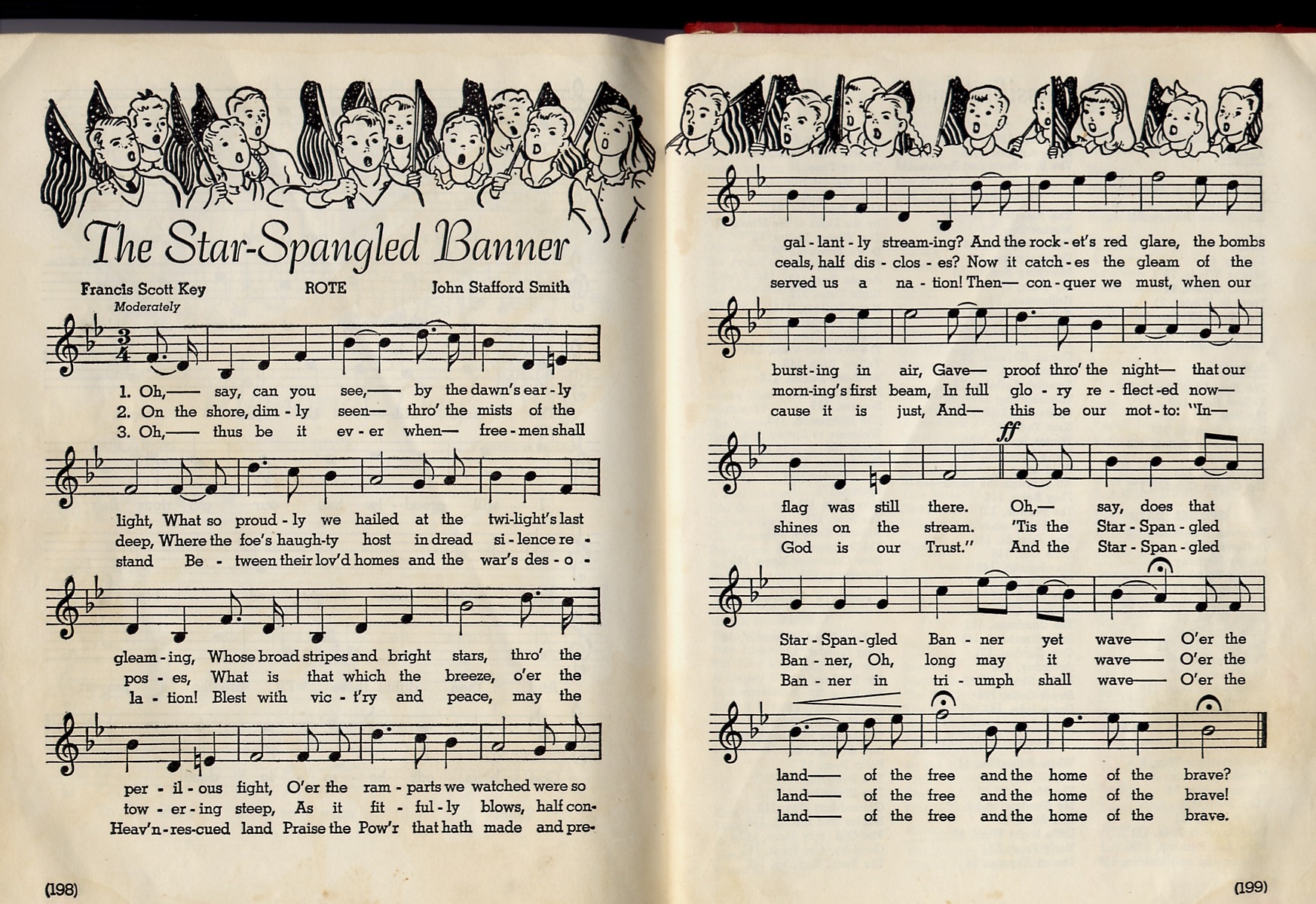
The-Star-Spangled-Banner

I have a weakness–I am crazy, absolutely nuts, about our national anthem.

The words are difficult and the tune is almost impossible, but frequently when I’m taking a shower I sing it with as much power and emotion as I can. It shakes me up every time.

I was once asked to speak at a luncheon. Taking my life in my hands, I announced I was going to sing our national anthem–all four stanzas.

This was greeted with loud groans. One man closed the door to the kitchen, where the noise of dishes and cutlery was loud and distracting. “Thanks, Herb,” I said.

“That’s all right,” he said. “It was at the request of the kitchen staff.”

I explained the background of the anthem and then sang all four stanzas.

Let me tell you, those people had never heard it before–or had never really listened. I got a standing ovation. But it was not me; it was the anthem.

More recently, while conducting a seminar, I told my students the story of the anthem and sang all four stanzas. Again there was a wild ovation and prolonged applause. And again, it was the anthem and not me.

So now let me tell you how it came to be written.

In 1812, the United States went to war with Great Britain, primarily over freedom of the seas. We were in the right. For two years, we held off the British, even though we were still a rather weak country. Great Britain was in a life and death struggle with Napoleon. In fact, just as the United States declared war, Napoleon marched off to invade Russia. If he won, as everyone expected, he would control Europe, and Great Britain would be isolated. It was no time for her to be involved in an American war.

At first, our seamen proved better than the British. After we won a battle on Lake Erie in 1813, the American commander, Oliver Hazard Perry, sent the message “We have met the enemy and they are ours.” However, the weight of the British navy beat down our ships eventually. New England, hard-hit by a tightening blockade, threatened secession.

Meanwhile, Napoleon was beaten in Russia and in 1814 was forced to abdicate. Great Britain now turned its attention to the United States, launching a three-pronged attack. The northern prong was to come down Lake Champlain toward New York and seize parts of New England. The southern prong was to go up the Mississippi, take New Orleans and paralyze the west. The central prong was to head for the mid-Atlantic states and then attack Baltimore, the greatest port south of New York. If Baltimore was taken, the nation, which still hugged the Atlantic coast, could be split in two. The fate of the United States, then, rested to a large extent on the success or failure of the central prong.

The British reached the American coast, and on August 24, 1814, took Washington, D. C. Then they moved up the Chesapeake Bay toward Baltimore. On September 12, they arrived and found 1000 men in Fort McHenry, whose guns controlled the harbor. If the British wished to take Baltimore, they would have to take the fort.

On one of the British ships was an aged physician, William Beanes, who had been arrested in Maryland and brought along as a prisoner. Francis Scott Key, a lawyer and friend of the physician, had come to the ship to negotiate his release. The British captain was willing, but the two Americans would have to wait. It was now the night of September 13, and the bombardment of Fort McHenry was about to start.

As twilight deepened, Key and Beanes saw the American flag flying over Fort McHenry. Through the night, they heard bombs bursting and saw the red glare of rockets. They knew the fort was resisting and the American flag was still flying. But toward morning the bombardment ceased, and a dread silence fell. Either Fort McHenry had surrendered and the British flag flew above it, or the bombardment had failed and the American flag still flew.

As dawn began to brighten the eastern sky, Key and Beanes stared out at the fort, trying to see which flag flew over it. He and the physician must have asked each other over and over, “Can you see the flag?”

After it was all finished, Key wrote a four stanza poem telling the events of the night. Called “The Defence of Fort M’Henry,” it was published in newspapers and swept the nation. Someone noted that the words fit an old English tune called “To Anacreon in Heaven” –a difficult melody with an uncomfortably large vocal range. For obvious reasons, Key’s work became known as “The Star Spangled Banner,” and in 1931 Congress declared it the official anthem of the United States.

Now that you know the story, here are the words. Presumably, the old doctor is speaking. This is what he asks Key

Oh! say, can you see, by the dawn’s early light,
W hat so proudly we hailed at the twilight’s last gleaming?
Whose broad stripes and bright stars, through the perilous fight,
O’er the ramparts we watched were so gallantly streaming?

And the rocket’s red glare, the bombs bursting in air,
Gave proof thro’ the night that our flag was still there.
Oh! say, does that star-spangled banner yet wave,
O’er the land of the free and the home of the brave?

“Ramparts,” in case you don’t know, are the protective walls or other elevations that surround a fort. The first stanza asks a question. The second gives an answer

On the shore, dimly seen thro’ the mist of the deep,
Where the foe’s haughty host in dread silence reposes,
What is that which the breeze, o’er the towering steep.
As it fitfully blows, half conceals, half discloses?

Now it catches the gleam of the morning’s first beam,
In full glory reflected, now shines on the stream
‘Tis the star-spangled banner. Oh! long may it wave
O’er the land of the free and the home of the brave!


“The towering steep” is again, the ramparts. The bombardment has failed, and the British can do nothing more but sail away, their mission a failure.

In the third stanza, I feel Key allows himself to gloat over the American triumph. In the aftermath of the bombardment, Key probably was in no mood to act otherwise.

During World War II, when the British were our staunchest allies, this third stanza was not sung. However, I know it, so here it is

And where is that band who so vauntingly swore
That the havoc of war and the battle’s confusion
A home and a country should leave us no more?
Their blood has washed out their foul footstep’s pollution.

No refuge could save the hireling and slave
From the terror of flight, or the gloom of the grave,
And the star-spangled banner in triumph doth wave
O’er the land of the free and the home of the brave.


The fourth stanza, a pious hope for the future, should be sung more slowly than the other three and with even deeper feeling.

Oh! thus be it ever, when freemen shall stand
Between their loved homes and the war’s desolation,
Blest with vict’ry and peace, may the Heav’n – rescued land
Praise the Pow’r that hath made and preserved us a nation.

Then conquer we must, for our cause is just,
And this be our motto–“In God is our trust.”
And the star-spangled banner in triumph doth wave
O’er the land of the free and the home of the brave.

I hope you will look at the national anthem with new eyes. Listen to it, the next time you have a chance, with new ears.

And don’t let them ever take it away.

–Isaac Asimov, March 1991*
I could not have said it any better.

*My apologies to whomever if I violated any copyrights- there were none mentioned on the page where I found it.
Why I Love Neal, part XX

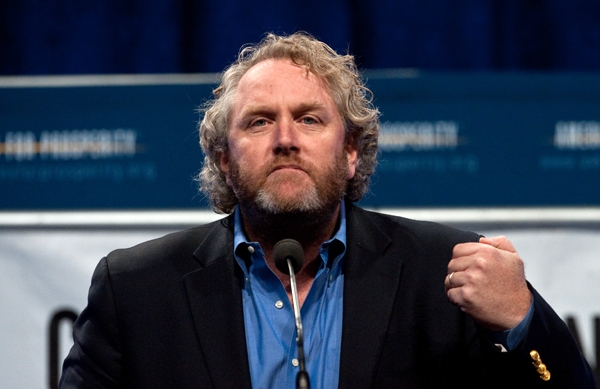
For those who don’t know, Neal Boortz was until recently a talk radio host in the Atlanta area, and had been since the Seventies. He specialized in libertarianism and offending people, not always in that order. Now that he’s in retirement he’s taken more to Twitter. A sample:

https://twitter.com/Talkmaster/status/297177334803468288

https://twitter.com/Talkmaster/status/297178041430470657

https://twitter.com/Talkmaster/status/297179088051912706

https://twitter.com/Talkmaster/status/297179170973306880

https://twitter.com/Talkmaster/status/297180500752232449

Herman Cain is his current replacement in the old show. I wish Herman luck, but he is not The Talkmaster. There can only be one.

3D Cinema and TV- an observation

The hands-on, absolutely. best. frickin. statement. about 3d in video entertainment today (I’m looking at you, James Cameron).

And really, it seems fitting that the first 3D film I actually want to see is one that doesn’t have a storyline. Up until now, the extra dimension granted by 3D cinematography has contributed little but distraction to the experience of following one as it unfolds. It’s like nailing Mel Gibson to the side of a taxi: people will stare, probably pay more to see it, but ultimately it’ll only distract passengers from enjoying the ride.

…3D movies — hugely expensive investments of mass generic appeal made by Hollywood, partly to fight piracy (it’s harder to illegally copy, download and watch a 3D movie), partly to get people out of their homes and into the cinemas (US cinema attendance was at a five-year low in 2010) and partly to better compete with the meteoric rise of videogames.

via Wired-UK

Jeez, what could have possibly happened?

News from Iran:

Mystery Surrounds Fordow Blast

Jerusalem, Jan 27. – Media reports Sunday suggest a damaging explosion at Iran’s top-secret Fordow nuclear development site took place last week, leaving as many as 190 workers dead.

Following the blast, the main road from Qom to Tehran was closed for several hours, the German newspaperDie Welt reported. If the reports are to be believed, the explosion was perhaps the most serious blow against the Iranian nuclear program to date.

Israeli Prime Minister Benjamin Netanyahu commented Sunday as the world marked international Holocaust Remembrance Day, the Iranians were continuing both to deny the Holocaust and pursue their goal of destroying the Jewish state. “They are not halting their unceasing and methodical race to obtain atomic weapons for the purpose of realizing this goal. We are not taking these threats lightly.”


Paging Mossad to the white courtesy phone, please…

via Ace

The Black Dog

I have found a name for my pain. (No, it’s not Batman.)

In the past few weeks, I have been extremely distracted by the move to the Undisclosed Location and all the jarring and uprooting and just plain hard work that entailed. But there’s been another issue, an elephant in the room I didn’t want to acknowledge, partly because I couldn’t describe it.

As usual, I fall back on the words of those more educated or who simply write better than I can. One such is The Diplomad, who came up with that name.

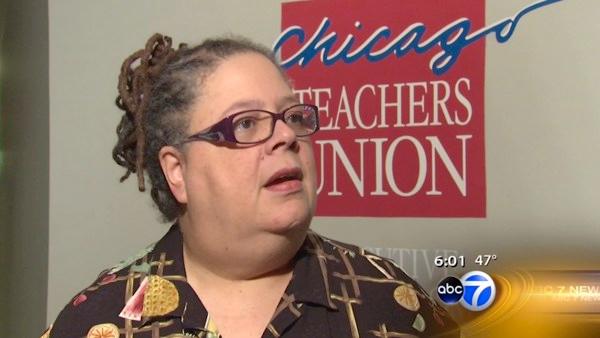
Apologies for the light blogging these past few days. Having one of those periodic visits by what Churchill and others have called the “black dog.” A little one, mind you, but nevertheless it interferes with my ability to engage in witty repartee of the blog-type. Let me explain. I am not talking about some clinical depression. I am talking about the black dog that bites you when you read the news, and see and hear the politicians–Democrat and Republican, American and foreign–prattle on about anything and everything except the facts. There are so many facts out there the size of elephants or at least the size of CTU President Karen Lewis, yet the world’s politicians manage not to see them and to see, instead, what they believe in.

Black Dog. Yes, I’ve been bitten by that fellow as well. It’s hard not to look at what is going on in our country today and not feel just a touch of, if not despair, then a strong sense of foreboding.

I spent the last sixty-odd days working side by side with folks you would call the “salt of the earth”-  the people who fix things, make things, make things happen in the background that is never seen unless it stops working. The folks who keep society functioning. The one universal thread I saw was a sense of “preparing”, a quiet withdrawal back to the near and dear, a vibe you only feel when something like a big hurricane is coming- it’s big, it’s inevitable, and it may tear your life apart, but you ready yourself as best as you can.

I think I know what it is, and am afraid of the knowing, so I turn from the macro to the micro and just get on with things. Now is a time for casting aside the trivial and unimportant and shoring up that which really matters, for a storm is coming and none of us knows what it will bring.

The Black Dog. I like that. It fits.

A semi-sorta kinda-positive look towards our future

Which I find refreshing and a little encouraging, as it is my wont to look at the most terrible outcomes and see them coming true. (Many posts on this blog will back this up.)

Ms. Hoyt, however, due to her quite different experiences in life (which you’ll have to read about in her blog to learn of), has a- well, not necessarily positive outlook, but one that on reflection may be a lot more accurate and a bit less dismal than my own.

Here are some bits and pieces from her post “It All Ends In Chickens“. (Seriously, it does.)

I’ve said before, and I’ll say again, that this country is in for a very rough time, maybe the roughest time we’ve ever endured, simply because what can go on won’t, and because in a time when technological change is pushing is towards greater individual choice, responsibility and freedom (yes, I can expand on it) our exquisitely trained “managing” class (not just in government, companies, churches, charitable societies are all on the same boat) has been TRAINED to hate our foundational principles and to idolize Europe’s centralized system which was moribund back in the seventies, and which is now completely at odds with the direction of the technology.

I can’t fully tell you all the ways in which America is different – or how little the rest of the world “gets” us.  I just can’t.  I can’t even explain it to them.  My brother, for instance who likes reading history (though mostly historical fiction) was once telling me about this history book he found and how it was probably something I couldn’t get here, so he’d send it to me when he was done reading.  This is when I sighed and informed him that back then (pre-Amazon which changed my buying methods) I belonged to the history book club, and I’d read that book a year ago, and by the way there was also this, this and this.

See, in Portugal they have this idea of the US as “futuristic” which to them means that nothing that isn’t as new as tomorrow matters here.  The idea of oh, my plumber, who is a civil war reenactor and can tell you what a soldier ate for breakfast on any given day of any given year of the war (perhaps a very slight exaggeration, but very slight, trust me) and who spends his time, money and considerable skull sweat studying the civil war, doesn’t fit into their idea of America.

Yes, some areas will go Mad Max.  I was telling a friend shortly after Sandy that he really must have a backup plan in case NYC goes all “Escape from NY” because I don’t have enough guns to go in and rescue him.  (Will NYC be one of the areas that goes Mad Max?  I don’t know.  Actually I think they’re first on the list of “most likely to glow with radioactive light” – but that’s another aspect.)

In law and on paper, yeah, we’re headed to a total collapse that would lead to that sort of thing…  But the US, never having experienced that sort of collapse doesn’t know, bone deep, that collapses are never that absolute.  Having watched collapses – Zimbabwe – at a distance, we see them as absolute.

But humans are humans.  Humans are no more law abiding when society falls apart than they are when it’s whole – in fact, they’re less.  Even in a country as law abiding as the US (we are.  Truly) we’re each of us already violating three laws before breakfast because the d*mn things have multiplied to the point to obey one you have to violate the other.

When laws and rulers (yes, I know they’re supposed to be administrators, but most of them, right now, from corporate managers to the president, are under the misguided impression they’re rulers and acting as such) are suicidal, the normal person still chooses NOT to commit suicide.  And contrary to the Marxist view of society which has influenced many of us whether we know it or not (having it shoved down your throat for seventy years does that) humans are not in general “everyone’s hand against everyone else” unless a kindly government prevents their killing each other.  Humans, in general, are social animals who cooperate for mutual benefit.

Just a taste- read the whole thing for the full flavor. And a ray of (some) hope.

And to learn about the chickens.