View Of Fairmont Waterworks Philadelphia 1860


…art, music, and opinions from Lower Alabama

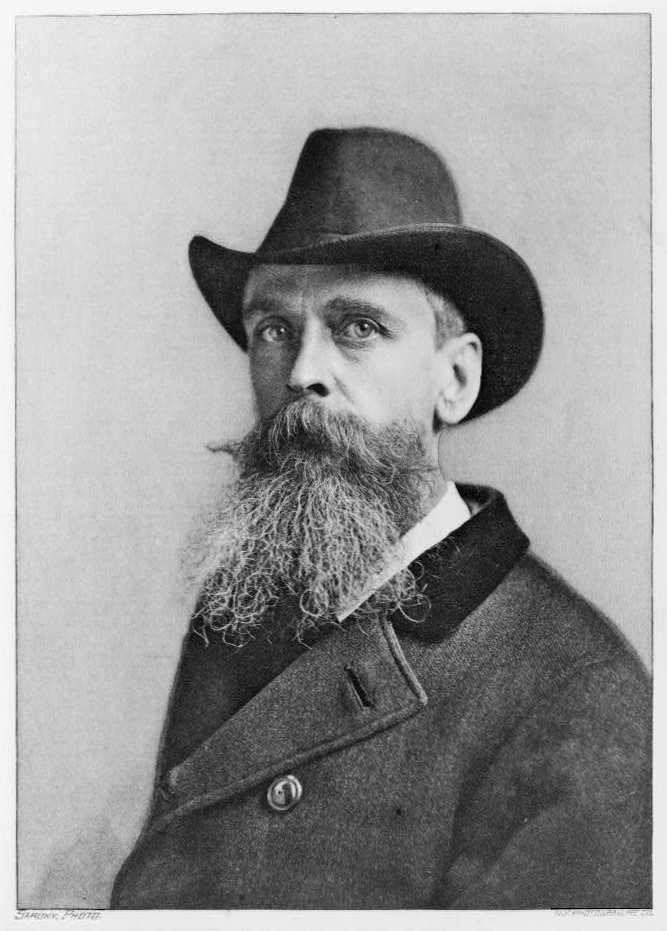
Thomas Moran (February 12, 1837 – August 25, 1926) was an American painter and printmaker of the Hudson River School in New York whose work often featured the Rocky Mountains. Moran and his family, wife Mary Nimmo Moran and daughter Ruth, took residence in New York where he obtained work as an artist. He was a younger brother of the noted marine artist Edward Moran, with whom he shared a studio. A talented illustrator and exquisite colorist, Thomas Moran was hired as an illustrator at Scribner’s Monthly. During the late 1860s, he was appointed the chief illustrator for the magazine, a position that helped him launch his career as one of the premier painters of the American landscape, in particular, the American West.[1]
Moran along with Albert Bierstadt, Thomas Hill, and William Keith are sometimes referred to as belonging to the Rocky Mountain School of landscape painters because of all of the Western landscapes made by this group.[2]—
Thomas Moran began his artistic career as a teenage apprentice to the Philadelphia wood-engraving firm Scattergood & Telfer. Moran found the engraving process “tedious”[3] and spent his free time working on his own watercolors.[4] By the mid-1850s he was drawing the firm’s illustrations for publication rather than carving them. At that time, he encountered illustrated books that included examples of the work of British artist J. M. W. Turner, who was to be a lasting influence on Moran’s work.[5] He also began studying with local painter James Hamilton. Moran traveled to England in 1862 to see Turner’s work. From that point on, he emulated Turner’s use of color, his choice of landscapes, and was inspired by his explorations in watercolor, a medium for which Turner was particularly well-known. During the 1870s and 1880s, Moran’s designs for wood-engraved illustrations appeared in major magazines and gift oriented publications. Although he mastered multiple printing media including wood-engraving, etching, and lithography, which he learned from his brothers, he received renown for his paintings in oil and in watercolor. The height of his career coincided with the popularity of chromolithography, which Moran used to make color prints of his works, so that they could be widely distributed. He was also one of the leaders of the etching revival in the United States and Great Britain.[5]
Can’t help it. I love American landscape romantic artists. Enjoy.


John Rogers Cox (March 24, 1915 – January 25, 1990) was an American painter from Terre Haute, Indiana. His style and subject matter align him with the Regionalist (American scene painting) and Magic Realist landscape tradition.[5]
Cox was born in Terre Haute, Indiana in 1915. His father, Wilson Naylor Cox, was president of the Terre Haute National Bank, later Terre Haute First National Bank.[2][6] John Rogers was one of four brothers, Wilson Naylor “W.N.” Cox, Jr., the eldest, born in 1909, Francis “Fritz” Gardenhire Cox, the next oldest born two years later, and twins John Rogers and Benjamin Guille born on March 24, 1915.[2] Cox’s parents sent him to the University of Pennsylvania to study business but he later enrolled in a Bachelor of Fine Arts program conducted jointly by the University of Pennsylvania and the Pennsylvania Academy of the Fine Arts.[2] He graduated in 1938. After failing to find a commercial arts job in New York he returned to Terre Haute and found work as a bank messenger and later a teller.[4] He married Mary Hermine Mayer, a Terre Haute local, on December 27, 1939, and they eventually had three children, two sons, John Rogers Cox, Jr. and Henry Douglas Cox and a daughter, Janet Naylor Cox, born in 1943 who died in childhood.[2][7]
Cox left his job at the bank in 1941 and was appointed the first director of the newly formed Sheldon Swope Art Gallery in Terre Haute having been offered the position by William T. Turman, professor of art at Indiana State Teachers College, a recognized artist and chief adviser to the Swope.[6][8] Cox, describing Turman’s job offer, said “When I heard the word ‘painting’ and when he offered me $600 a year more than I was making, it didn’t take me more than a minute to say yes!”[4] At 26, he was the youngest museum director in the U.S.[4] Cox and his wife Hermine made several trips to New York City to buy art for the gallery.[9] His objective was to buy high quality works by living American artists which would be relatively affordable compared to works by European masters.[8] He assembled the Swope’s founding collection purchasing 23 paintings by living American artists in the 15 months before the inaugural show which contained new works by artists such as Grant Wood, Thomas Hart Benton, Charles Burchfield, Zoltan Sepeshy and Edward Hopper.[10][11] Cox also arranged for the loan of several paintings and sculptures from the Museum of Modern Art in New York, the Whitney Museum of American Art and the Art Institute of Chicago and Carrie C. Schell, first secretary of the Board of Managers, contributed works by Terre Haute born artists Janet Scudder and Caroline Peddle Ball.[9] The museum opened to the public on March 21, 1942, with an exhibition of more than 130 works in six exhibition rooms.[6][8][9][11] Cox was the first name on the registry of guests for the show.[8] In a review of the exhibition, the editor of The Art Digest, Peyton Boswell Jr., said that by building the collection around contemporary American artists, Cox and the Swope board of managers had chosen the path that “brought greatness to the Whitney Museum and to the Addison Gallery in Andover”.[9] Seventeen of the original 23 paintings remain at the Swope and the founding collection is still the feature for which the museum is best known.[8][11]
This one was hard- the guy only painted around 20 works and the little that is about him on the internet is low-quality; but I’ve done my best, because I really like his work. Apologies for any errors I’ve made putting up these next few pages…