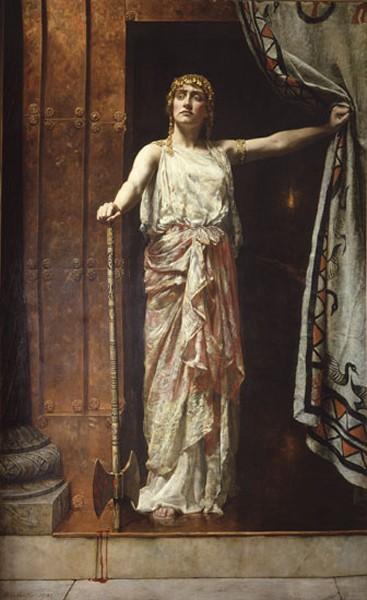
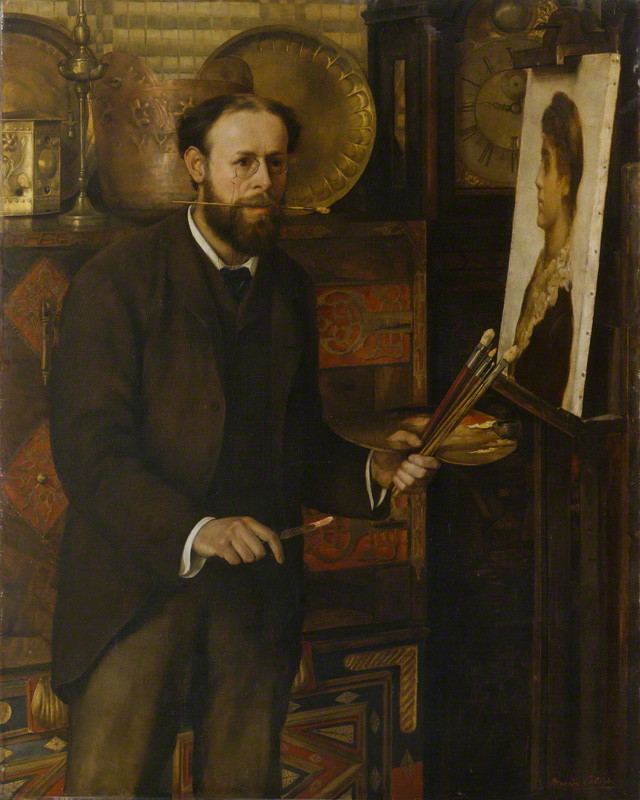
The Honourable John Maler CollierOBERPROI (27 January 1850 – 11 April 1934) was a leading English artist, and an author.[1] He painted in the Pre-Raphaelite style, and was one of the most prominent portrait painters of his generation. Both his marriages were to daughters of Thomas Henry Huxley. He studied painting at the Munich Academy where he enrolled on 14 April 1875 (Register: 3145) at the age of 25.
In due course, Collier became an integral part of the family of Thomas Henry HuxleyPC, President of the Royal Society from 1883 to 1885. Collier married two of Huxley’s daughters and was “on terms of intimate friendship” with his son, the writer Leonard Huxley. Collier’s first wife, in 1879, was Marian (Mady) Huxley. She was a painter who studied, like her husband, at the Slade and exhibited at the Royal Academy and elsewhere. After the birth of their only child, a daughter, she suffered severe post-natal depression and was taken to Paris for treatment where, however, she contracted pneumonia and died in 1887. Collier’s daughter by his first marriage, Joyce, was a portrait miniaturist, and a member of the Royal Society of Miniature Painters.
In 1889 Collier married Mady’s younger sister Ethel Huxley.[2] Until the Deceased Wife’s Sister’s Marriage Act 1907 such a marriage was not possible in England, so the ceremony took place in Norway. By his second wife he had a daughter and a son, Sir Laurence Collier, who was the British Ambassador to Norway 1941–51.
As you will see, Mr. Collier definitely had an eye for the ladies, and unlike many of his contemporaries actually seemed to find attractive models for his work. Enjoy!
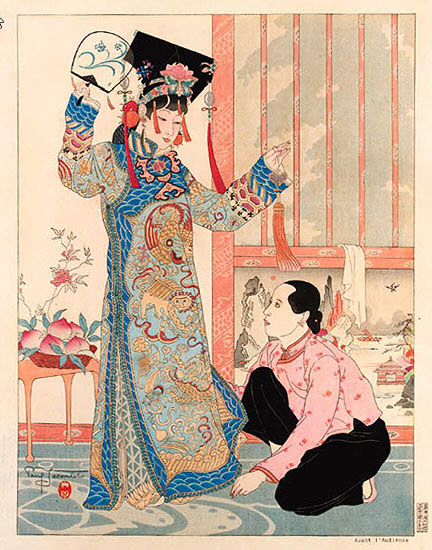
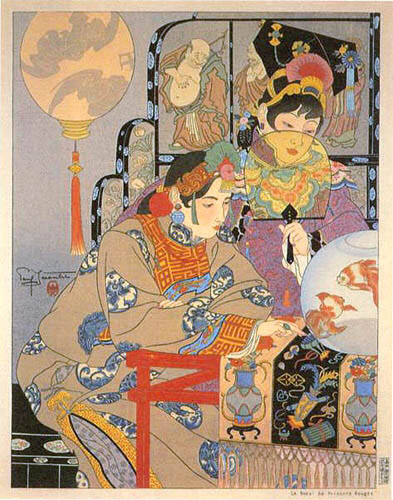
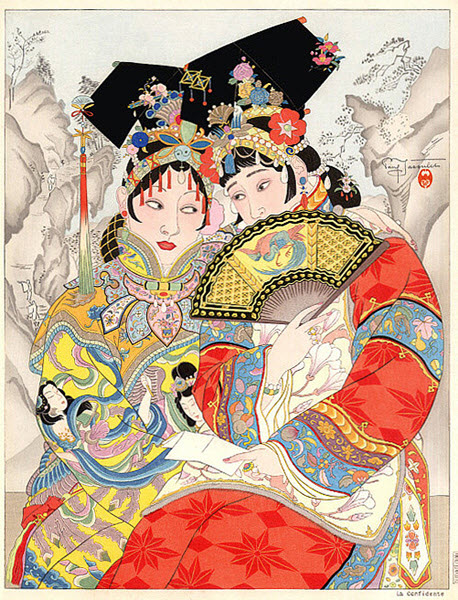
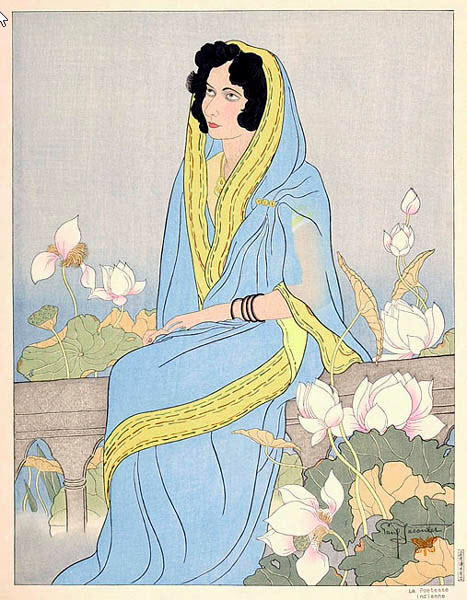
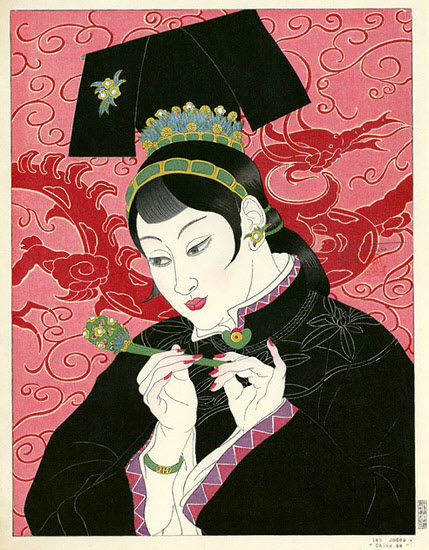
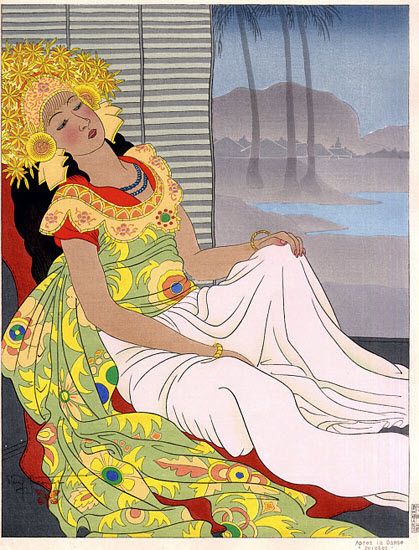
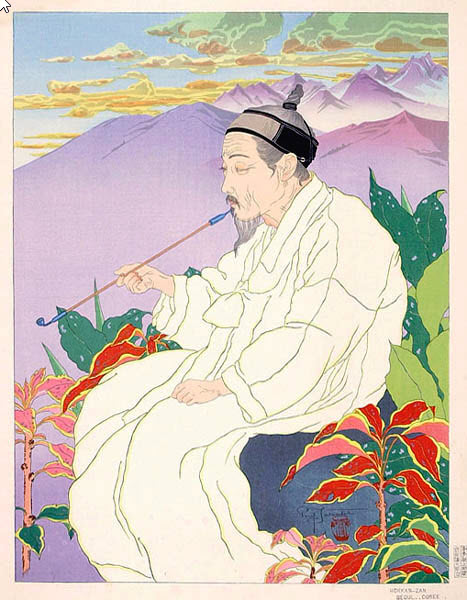
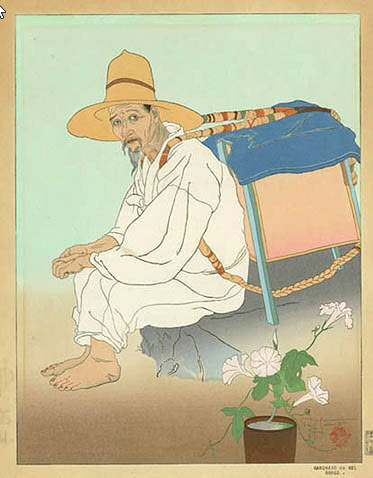
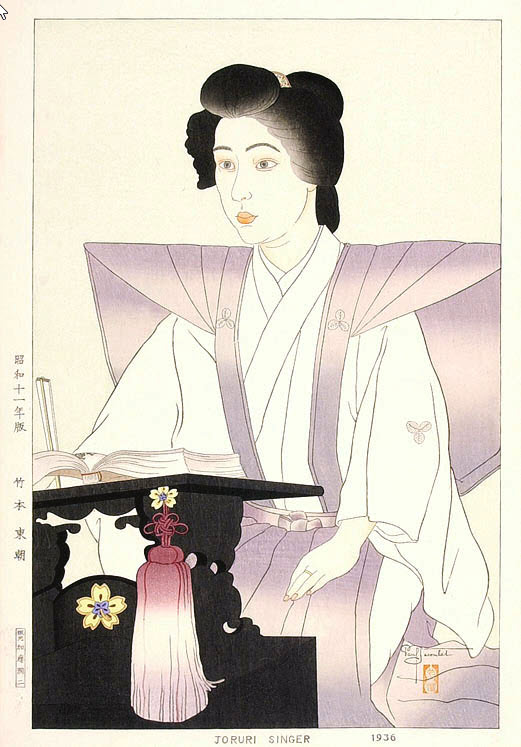
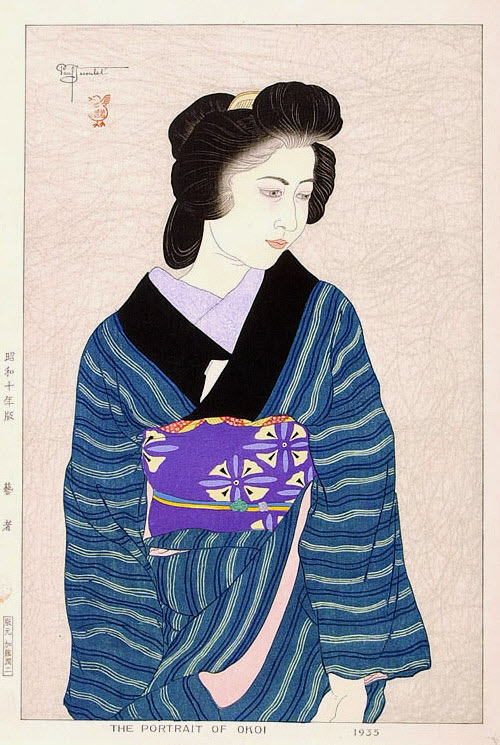
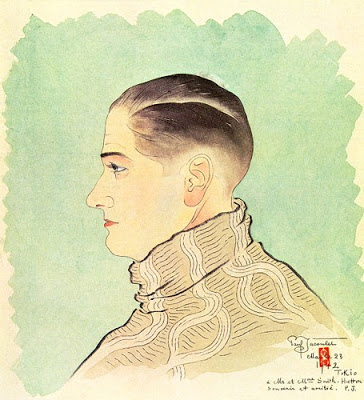
Paul Jacoulet (1896–1960) was a French, Japan-based woodblock print artist known for a style that mixed the traditional ukiyo-e style and techniques developed by the artist himself.
Jacoulet was born in Paris in 1896 and lived in Japan for most of his life. During World War II, he moved to Karuizawa, where he survived in the countryside by growing vegetables and raising poultry. During the occupation, at the request of General Douglas MacArthur, he was recruited by Commandant Charles McDowell to work at the Tokyo Army College. MacArthur would join Greta Garbo, Pope Pius XII and Queen Elizabeth II, as a prominent collector of Jacoulet’s work.
Jacoulet prints are rare and often sell in the $5,000 to $20,000 range. The Parisian Lady, a print from 1934, sold for $25,000 at auction.[1]
Paul Jacoulet’s creative period was 1939-1960. Jacoulet is considered one of the few western artists to have mastered the art of woodblock printing sufficiently to be recognized in Japan. His works are almost all of people, either portraits or full body images capturing some background details. He has had a number of exhibits in the years since his death including two at the Pacific Asia Museum in Pasadena (1983 and 1990), the Yokohama Art Museum (1996 and 2003), the Riccar Museum in Tokyo (1982), and the Isla Center for the Arts on Guam (1992 and 2006). He also achieved some recognition in his lifetime including an exhibit sponsored by the US Fifth Air Force (in 1946 according to Time Magazine). Two complete catalogues of his woodblock prints exist (one in English and one in Japanese with some English) as well as exhibition books and posters from all his exhibits. The earliest book about him was written during his lifetime (Wells, 1957) and includes the original desperation prices for which he sold his work at that time. Many prints are very rare because all Jacoulet’s pre-World War II work that had not already been taken out of the country by collectors was destroyed by fire. Jacoulet was a true renaissance man –French but born and raised in Japan, expert in Kabuki, proficient on traditional Japanese musical instruments, a good calligrapher, conversant in several languages, and a recognized butterfly collector. Growing up in Tokyo he was the next door neighbor of Ukiyoe authority Yone Noguchi; he was taught English by Noguchi’s American wife, Leonie Gilmour, and befriended their son, the young Isamu Noguchi. Jacoulet’s father was an ambassador so Paul was widely traveled and was doted upon by his mother. She supported his artistic endeavors all her life. She believed that if French Polynesia was good for Paul Gauguin, then Jacoulet must go there too. She sent him away many winters from Japan to various islands in Micronesia, Indonesia, and the Philippines. Although his most valued works are from this part of the world, he also has a substantial number of prints with subjects from China, Korea, all areas of Japan, and Mongolia. Just one print depicts an American.
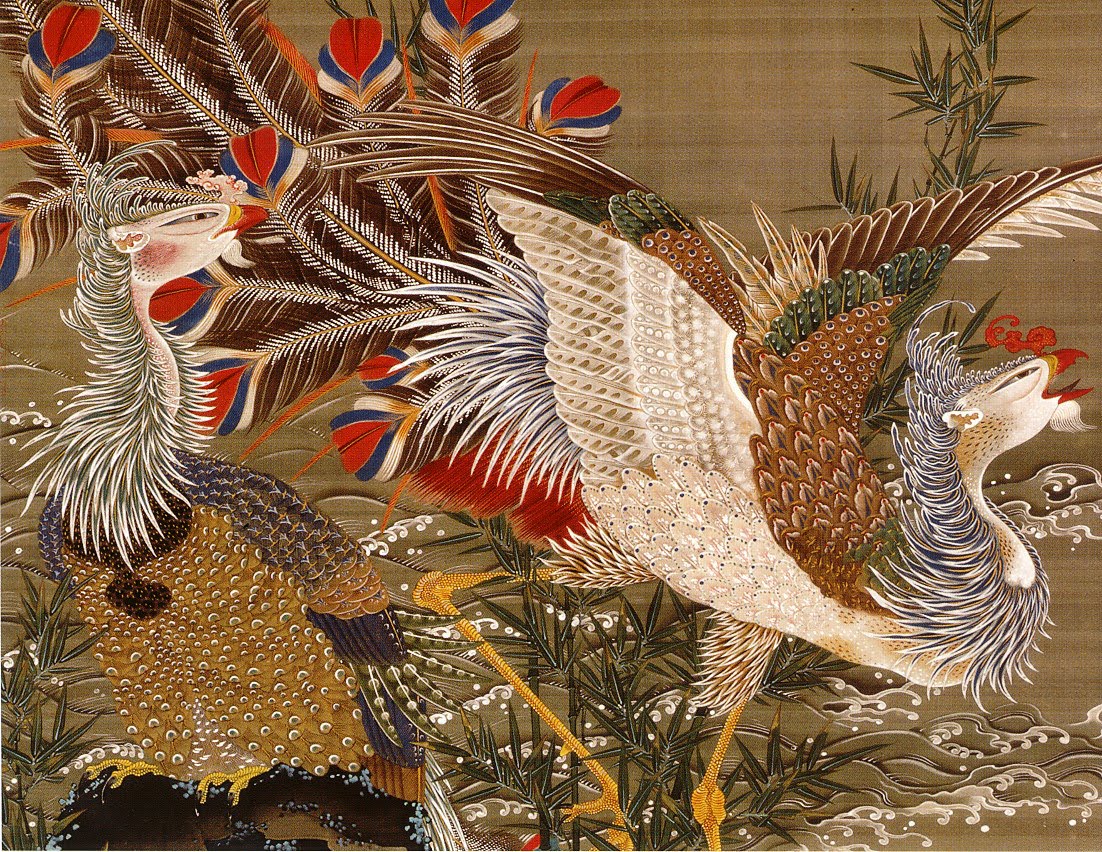
Yes I am a complete sucker for Japanese-style artwork.
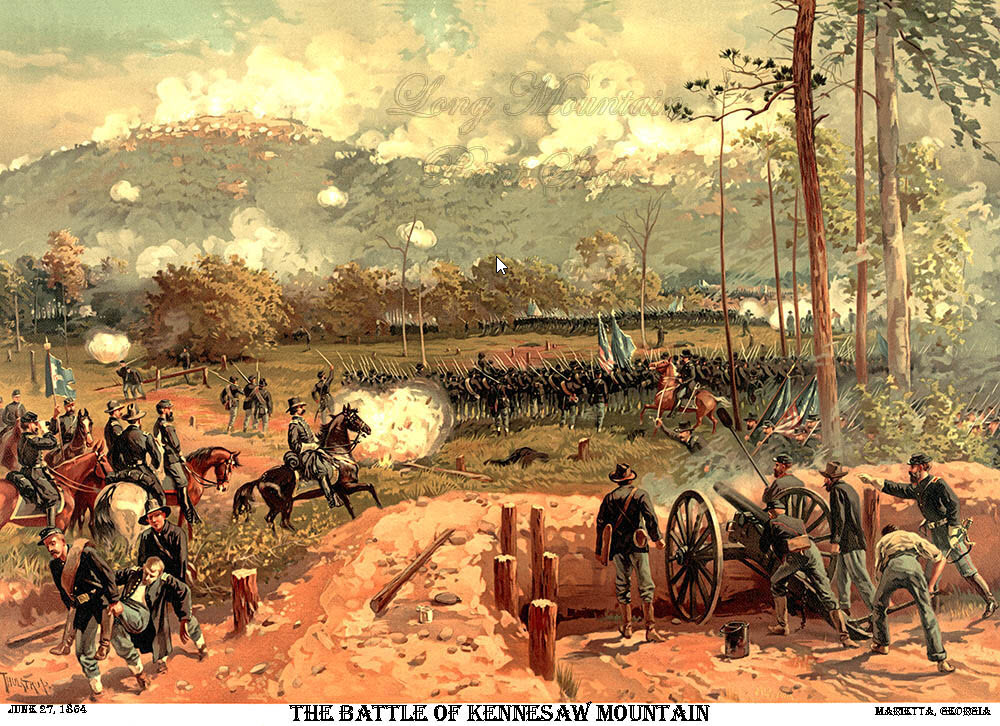
On this day in 1864, Union General William T. Sherman (known locally as “that bastard from Cleveland”) launches a major attack on Confederate General Joseph Johnston’s army at the Battle of Kennesaw Mountain in Georgia.
In the days leading up to the assault at Kennesaw Mountain, Sherman tried to flank Johnston. Since one of Johnston’s generals, John Bell Hood, attacked at Kolb’s Farm, Georgia, and lost 1,500 precious Confederate soldiers, Sherman believed that Johnston’s line was stretched thin and that an assault would break the Rebels. So he changed his tactics and planned a move against the center of the Confederate lines around Kennesaw Mountain. He feigned attacks on both of Johnston’s flanks, then hurled 8,000 men at the Confederate center. It was a disaster. Entrenched Southerners bombarded the Yankees, who were attacking uphill. Three thousand Union troops fell, compared with just 500 Confederates.
All this area was my old stomping grounds- I grew up in Smyrna, Georgia, which is just slightly southwest of Kennesaw Mountain. The area around Kennesaw, Marietta, and Smyrna is dotted with the battlefields of the Battle of Atlanta. If you have any curiosity at all you cannot help but get steeped in Civil War lore.
Before the growth of Atlanta exploded in the Seventies, the whole area was nothing but farms and sleepy little southern towns. Everyone had ancestors and family who had been affected by the Sherman’s leadup to the March to the Sea. On every back road and many small fields were the familiar signs telling of this and that short battle that happened while the armies marched back and forth north of Atlanta.
Alas, except for the signs, all that is gone now, swallowed by the megalopolis that Atlanta has become. The towns and the byways that I grew up in no longer exist- only the names remain, and a suburban sameness.
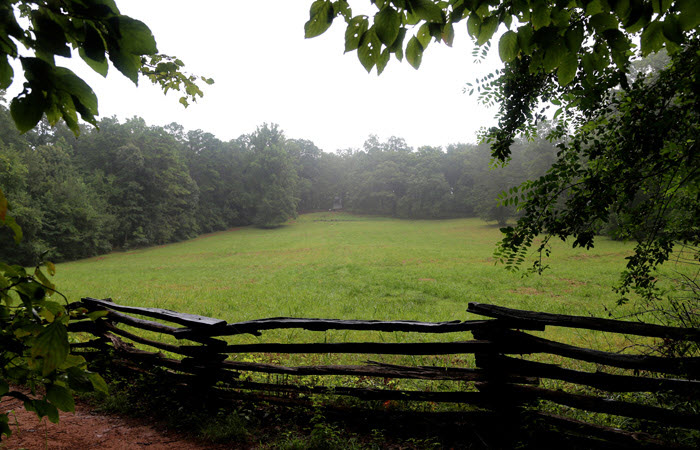
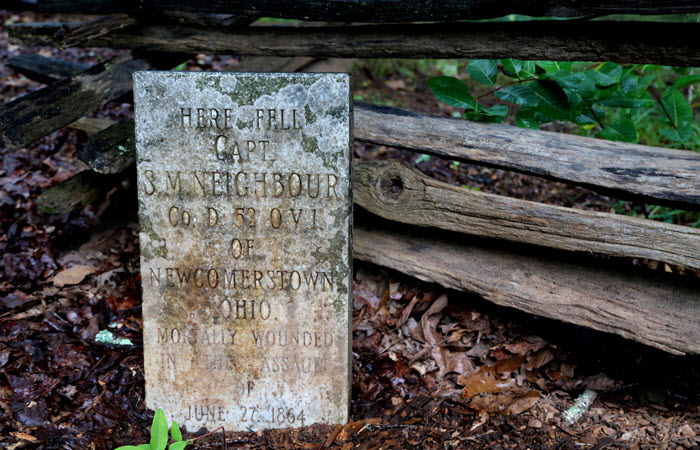
Cheatham Hill
It was not hard to leave there.
That said, I’ll always remember how it was ‘way back when; the walks at Cheatham Hill, the old monument to the soldiers of Illinois that stood there, the guns that still stood on top of the Mountain where you could see the impossible task of the Union soldiers who charged up the slopes, and all the quiet places now buried under concrete and asphalt.


_by_John_Collier.jpg)